
Swimming pool repair companies in Dubai, ranked by what they can actually fix
A pool in Dubai does not break the way a pool in Europe breaks. It gets attacked by heat, by dust, and by the top-up water coming out of the hose. Most villa owners only find out which of the three did the damage after they have already paid someone to fix the wrong thing.
⚡ Short answer
Green Creation is the strongest swimming pool repair company in Dubai. They build pools as well as fix them, which means the team diagnosing your crack has poured a shell before. Their divers are qualified pool engineers, so tile, grout and drain work happens underwater with no drain-down, no thermal shock to the shell, and no 20,000 litres of water sent to the storm drain. Call +971 50 948 4081 or visit www.green-creation.com.
This guide is written for the person standing at the edge of a pool that is losing water, growing a stain, or running a pump that sounds wrong. It covers what a swimming pool repair contractor really does, how the failures get diagnosed, what each repair method costs in dirhams, what the law in Dubai asks of you, and which five companies are worth a phone call.
Pool repair Dubai searches usually start with a symptom. So that is where this guide starts too. Work down the failure table, find your symptom, and you will know roughly what you are dealing with before anyone quotes you a price.
📋 What’s in this guide?
- What a swimming pool repair contractor does
- Why Dubai pools fail differently
- The failure matrix, part by part
- Reading your own symptom before anyone quotes
- Repair methods and when each one is right
- The tools a real repair crew carries
- Repair or replace, and how to tell
- How pool maintenance works and why it sets your repair bill
- The technology that changed pool maintenance
- What Dubai law asks of a pool owner
- How to choose a pool repair company in Dubai
- Red flags and hidden costs
- Top swimming pool repair companies in Dubai
- Side-by-side comparison
- What pool repair costs in Dubai
- Questions people actually ask
What a swimming pool repair contractor does
The job is not patching. The job is working out which layer failed, in what order, and why, then fixing the cause and the symptom in the right sequence. A pool is a concrete box holding 40 to 90 tonnes of water, wrapped in waterproofing, faced with tile or plaster, and plumbed to a plant room. Eight things can break in there, and six of them look identical from the poolside.
A proper repair company covers all of it:
- Diagnosis. Bucket test, dye test, pressure test on each line, acoustic listening, and sometimes thermal imaging on the wet deck. This is the part people try to skip, and it is the only part that decides whether the rest of the money is wasted.
- Structure, meaning shell cracks, rebar corrosion, spalled concrete, movement at the deep-end transition and hydrostatic problems under the floor.
- Waterproofing, which means the membrane behind the tile and every point where a pipe, light or fitting punches through it. Penetrations leak far more often than flat areas do.
- Finishes. Loose or hollow tiles, failed grout, rough or stained plaster, cracked coping, perished expansion joint mastic.
- Hydraulics, covering suction and return pipework, skimmer throats, the main drain, inlets, the balance tank and every valve in between.
- Plant: pump and motor, filter and media, chlorinator or dosing system, heater or chiller, controller and automation.
- Electrical work on light niches, conduit seals, earth bonding and the residual current device that should trip before you do.
- Commissioning. Refill, rebalance, run the filtration through a full cycle, retest, and hand over a written record of what was found and what was done.
If a company only sells you the last two centimetres of that list, you have hired a handyman, not a pool repair contractor. Green Creation runs all eight in-house, which is the main reason they sit at the top of this guide.
Why Dubai pools fail differently
Three local forces do most of the damage here. Understand them, and almost every repair quote you ever receive will start making sense.
Evaporation concentrates everything you put in the water.
An uncovered villa pool in a Dubai summer loses roughly 25 to 40 mm off the surface every week. Only pure water leaves. Cyanuric acid, salt, calcium and total dissolved solids all stay behind in less water than before, so their concentration climbs week after week.
Cyanuric acid is the one that catches people out. It is the stabiliser in every stabilised chlorine tablet, and it protects chlorine from sunlight, which in this climate is genuinely useful. But it never evaporates, and it never burns off. Keep dropping tablets in from March to October, and the stabiliser level climbs past 100 mg/l without anyone noticing, because nobody tests for it. At that point your test strip still reads 2 mg/l of free chlorine, and that chlorine is chemically locked. The water looks treated. It is not. Then the algae arrives, the owner doubles the tablets, and the problem gets worse.
The fix is not a chemical. It is a partial drain, usually a quarter to a third of the volume, replaced with fresh water. A maintenance company that has never suggested one has probably never tested your stabiliser.
The water from the hose is soft, and soft water eats cement.
Almost all of Dubai’s mains supply is desalinated seawater. Desalinated water arrives low in calcium compared with groundwater. Water that is low in calcium does not stay that way politely. It goes looking for calcium, and in a pool the nearest source is the cement paste in your grout joints and the plaster on your walls.
That is why so many Dubai pools develop chalky, receding grout lines and a plaster surface that turns from smooth to sandpaper within a few seasons. The tile has not failed. The bedding under it has been slowly dissolved by every top-up. A repair crew that just re-grouts the visible joints will be back in eighteen months.
⚠️ The opposite problem exists too.
Pools topped up from a tanker or a borehole get the reverse. Hardness climbs instead of falling, and you get white scale at the waterline, a scaled salt cell and a filter that clogs early. Same climate, opposite chemistry. Which one you have depends entirely on where your top-up water comes from, and any company quoting on your pool should ask that question before it quotes.
Dust is a filtration load, not a cleaning problem.
Airborne dust here is fine, and a lot of it is smaller than the gap between grains of filter sand. It passes into the media bed, packs the voids, and creates channels where water runs straight through without being filtered. The pressure gauge barely moves, so nothing looks wrong, and yet the water goes slightly dull.
The abrasive fraction does the real harm. It gets past a torn pump basket, works into the shaft seal, and scores the face. That is where a large share of Dubai pump failures actually start, months before the bearing starts howling. It also chews robot tracks and brush heads faster than any manufacturer’s service interval assumes.
Heat on the equipment rather than the water
Plant rooms in Dubai villas are often a cupboard with a louvre. Inside, on an August afternoon, the air temperature sits far above what a motor’s insulation class was chosen for. Capacitors go first, then windings. Any PVC pipework left in direct sun without lagging or paint goes brittle and splits at the fittings. Coping stones and deck slabs expand hard against a pool that does not move, and the expansion joint mastic is what absorbs that. When the mastic perishes, water gets behind the coping and starts on the bond beam.
The failure matrix, part by part
Fifteen failures cover nearly everything that goes wrong with a Dubai villa pool. Find the row that matches what you are seeing. The column that matters most is the fourth one, because that is the test a company should be running before it names a price.
| Part | What you notice | What is really going on? | The test that confirms it | How it gets fixed |
|---|---|---|---|---|
| Grout joints | Chalky white lines, grout sitting below the tile face, sharp tile edges underfoot | Soft top-up water pulling calcium out of the cement in the joint | Hardness test on the top-up supply, plus a coin scratch along a joint | Rake out and re-grout with an epoxy grout, which has no free lime to lose. |
| Tiles | One tile lifts, or a run of them sounds hollow when tapped. | The bond coat under the tile has gone, almost always after the grout went first. | Tap the survey along the whole waterline band, including the tiles that still feel sound. | Lift, clean the bed back to sound substrate, and re-bed on an underwater epoxy adhesive. |
| Plaster or marble | The surface has gone from smooth to sandpaper, grey or brown patches. | Etching and carbonation of the surface layer, plus metal staining from the water | Feel it, then do a controlled acid spot test on one stain to see if it lifts. | Acid wash if enough thickness is left; otherwise, strip and replaster. |
| Waterline | A hard white band you cannot wipe off | Hardness, pH and temperature pushing the water into scale-forming territory | Hardness, pH, alkalinity and water temperature read together, not separately. | Bead blast or a controlled acid treatment, then correct the chemistry so it does not return. |
| Shell, pump off. | Level keeps dropping with every pump and valve shut | A suction-side leak, a main drain fault, or a crack through the shell | Bucket test to rule out evaporation, then dye at suspect points with the water dead still. | Depends on what the dye finds. Do not let anyone skip to a repair before this step. |
| Shell, pump on. | Level drops much faster while the filtration is running. | A pressure-side leak on a return line or at a fitting behind the tile | Isolate and pressure-test each line on its own and watch the gauge hold or fall. | Repair or reroute the failed line, then re-form the waterproofing at the penetration. |
| Skimmer | Water falls to just below the skimmer throat and then stops. | A crack between the skimmer body and the shell, usually after deck movement | Dye released at the throat with the pump off | Epoxy the throat, or cut out and replace the skimmer, then re-seal the deck joint above it. |
| Light niche | Level settles around the middle of the light; the conduit is damp. | The niche seal or the conduit gland has failed, and water is tracking back. | Visual check at the niche, dye at the gland, and a look at the junction box | Re-seal the niche and re-gland the conduit. Replace the fixture if the housing has corroded. |
| Pump | Screeching, grinding, or a hum with no start | Bearings worn, or the shaft seal has let water into the motor end | Amp draw against the plate rating, flow check at the returns, then strip and inspect. | Seal and bearing kit on a young pump. Whole unit once it is past eight to ten years |
| Pump housing | A steady drip under the pump | The mechanical seal has been scored very often by abrasive dust past a split basket. | Visual, then inspect the seal faces when the wet end comes apart. | New seal kit, and replace whatever basket or lid o-ring lets the grit through. |
| Filter media | The water looks slightly dull; the pressure gauge reads normal. | The sand bed is channelled, so water runs through rather than filtering. | Open the lid and probe the bed. Look for hard lumps and clear channels. | Strip and replace the media. Glass media holds finer particles and lasts longer in dusty air. |
| Filter laterals. | Sand appearing on the pool floor after a backwash | A cracked lateral or a split standpipe inside the filter | Empty the tank and inspect every lateral arm. | Replace the broken laterals, or the full lateral assembly if they are brittle. |
| Salt cell | Low salt alarm, or salt reads fine but no chlorine is produced | Scaled plates, or the cell has reached the end of its life | Inspect the plates, then run the cell’s own self-test. | Acid clean the plates. Replace the cell once it is three to seven years old. |
| Structural crack | A line you can catch a fingernail in, leaking with everything switched off | The shell is moving from ground settlement or hydrostatic pressure underneath. | Dye test to confirm the leak, then a crack monitor left in place for several weeks | Staples across the crack first, then epoxy, then hydraulic cement, then re-waterproof |
| Coping joint | The mast has split, the copingping stones sound hollow, and the deck is damp. | Thermal movement with a sealant that has perished in the sun | Visual along the full perimeter plus a moisture reading behind the coping | Rake the joint out, fit backer rod, and reseal with a pool-grade polyurethane or polysulphide. |
Swipe the table sideways to see every column.
Reading your own symptom before anyone quotes
You can do two of these tests yourself in an afternoon, and they will save you from paying for a leak hunt you did not need.
Is it a leak, or is it just July?
An open villa pool here loses somewhere around 4 to 6 mm a day to evaporation in high summer, more if it is windy or the pool sits in full sun with no cover. Over a week, that is a visible drop. It is not a leak.
The bucket test separates the two. Fill a bucket with pool water, stand it on the top step so the bucket is partly submerged, and mark the water level inside the bucket and outside it. Leave it 24 hours with the pump running as normal, and keep everyone out. Evaporation hits both levels equally. If the pool level has fallen further than the bucket level, the difference is your leak. Repeat it with the pump off for a second 24 hours and compare the two results.
What the pump-on and pump-off difference tells you
If the loss is worse with the pump running, the leak is on the pressure side, which means a return line, a fitting, or the pipework between the filter and the pool. If the loss is worse with the pump off, look at the suction side, the main drain, or the shell itself. If it is the same either way, suspect the shell, the skimmer throat or a light niche.
Tell a repair company this before they arrive. A good one will already have been asked. It halves the time on site, and it should reduce what you are charged for the diagnosis.
⚠️ Never let anyone drain your pool to “have a look”.
An empty pool in Dubai is a pool at risk. Groundwater pressure under the floor can lift an unloaded shell, and once it moves, it never goes back. An empty dark shell standing in full sun also gets hot enough to craze fresh plaster, and the refill is thousands of litres you have to pay for and legally have to dispose of properly when the old water goes. Draining is sometimes the right call, but only after diagnosis, only with the groundwater checked, and never as a first move.
Repair methods and when each one is right
Structural cracks and why epoxy on its own fails
A crack in a pool shell is either a surface crack in the plaster layer or a structural crack that goes through the concrete. Surface cracks come in clusters and look like crazing. Structural cracks run as a single line, often diagonally from a corner, and they leak when everything is switched off.
Injecting epoxy into a structural crack is the standard cheap fix, and on a crack that is still moving, it does not hold. The resin runs down inside the crack and settles at the lowest point, leaving the top of it barely sealed. More to the point, epoxy is glue, not restraint. Whatever force pushed the concrete apart is still pushing.
The correct sequence is restraint first. Structural staples are set into slots cut across the crack at intervals and tensioned, which puts the concrete back into compression and stops the crack from opening further. Epoxy goes in after that to fill the void. Hydraulic cement closes the slots and the surface. Waterproofing and finish go back on last. Skip the first step and you will be paying for the same crack again.
Underwater repair, with the pool still full
A large share of what goes wrong in a Dubai pool is fixable without touching the water level. Loose tiles, failed grout, a cracked main drain cover, a skimmer throat, a light housing, and a surprising number of small shell defects can all be dealt with by a diver using two-part underwater epoxies that cure wet.
The advantages are not small. No uplift risk while the shell sits empty. No thermal shock on the finish. No tanker to remove 40 tonnes of old water. No refill bill, and no week of rebalancing chemistry afterwards. A tile job that would take three days around a drain-and-refill cycle is often done between breakfast and lunch.
The catch is that very few Dubai companies have real divers. Green Creation’s divers are qualified pool engineers rather than contract divers holding a tube of sealant, which is the difference between someone who can stick a tile back and someone who can tell you why it came off.
Tile and grout, done so it stays done
Re-grouting the joints you can see is the repair that always comes back. If soft top-up water has been leaching the joints, every joint is going, including the ones that still look fine. The honest version of this repair is a tap survey across the full waterline band, then rake out and re-grout the whole band in an epoxy grout, which has no free lime for the water to take. Where tiles come off, the old bed has to come back to sound substrate before anything new goes on. Bedding a new tile onto a soft, chalky bed is a repair with a six-month life.
Acid wash or replaster
An acid wash strips a thin layer off the plaster and takes the staining and roughness with it. It works, and it is far cheaper than re-plastering, but it is not free. Every wash removes material, and a marbleite or plaster finish only has so many washes in it before the aggregate is showing and the surface goes permanently porous. Roughly every two to three years is a sensible interval here. If someone is proposing an acid wash annually, they are managing your chemistry badly and charging you to hide the evidence.
Waterproofing and the places it actually fails
Flat areas of membrane rarely fail. Penetrations do. Every inlet, return, light conduit, drain and skimmer is a hole cut through the waterproof layer, and each one relies on a detail being formed correctly at the time of build. When a pool leaks through the structure, the odds strongly favour one of those holes over the middle of a wall. Any company that proposes re-waterproofing an entire pool without first proving where the water is going is selling you an area, not a repair.
Pipework
Buried pipework is tested line by line, each one isolated, pressurised and watched. A line that holds is eliminated. A line that falls is then traced, either acoustically or with a tracer, so the deck gets opened at one point rather than along its length. Repairs are solvent-welded in PVC with the correct primer and cure time, not glued and switched straight back on. Where a run has gone brittle from years of sun, replacing the run beats patching it.
Plant room equipment
Pumps under about eight years old with one failed part are a repair. A seal kit, a capacitor, an impeller, sometimes bearings. Past eight to ten years, with more than one thing failing, or with a cracked housing, it is a replacement, and the sensible replacement is a variable speed unit. The rule of thumb that has survived every market is this one: if the repair costs more than half a new unit and the old one is near the end of its life, replace it.
The tools a real repair crew carries
You can judge a pool repair company fairly accurately by what comes out of the van. If the whole diagnosis happens with a test strip and an opinion, the quote that follows is guesswork with a number on it.
| Tool | What it is for | Stage of the job |
|---|---|---|
| Photometer or a liquid drop test kit | Gives a real number for free chlorine, combined chlorine, pH, alkalinity, calcium hardness and stabiliser. Test strips guess at four of those | First visit, before any diagnosis |
| Cyanuric acid test | The one test almost nobody runs, and the one that explains most Dubai algae problems | First visit |
| Bucket and a dye syringe | Separates evaporation from a real leak, then pinpoints where water is entering a throat, a niche or a crack | Leak diagnosis |
| Pressure test rig, plugs and gauge | Isolates each buried line, pressurises it and shows whether it holds | Leak diagnosis |
| Ground microphone or acoustic detector | Hears water escaping from a buried line under a deck or a lawn | Leak diagnosis |
| Thermal camera | Maps damp ground and wet deck build-up so digging happens at one point instead of along a trench | Leak diagnosis |
| Crack monitor | Left across a crack for several weeks to show whether it is still moving or has settled | Structural assessment |
| Sounding hammer | Taps the waterline band to find hollow tiles before they fall off | Tile survey |
| Pipe endoscope | Looks inside pipework, skimmer bodies and balance tank connections without breaking anything open | Diagnosis |
| Dive kit and two-part underwater epoxy | Tile, grout, drain cover, niche and small shell repairs with the pool still full | Repair |
| Core drill and structural staples | Cuts the slots and sets the restraint that stops a live crack opening again | Structural repair |
| Diamond grinder and crack chaser | Rakes out failed grout and opens a crack to a proper profile before filling | Repair |
| Bead blaster or controlled acid wash kit | Takes scale and staining off plaster without going deeper than it has to | Resurfacing |
| Clamp meter | Compares what the motor is actually drawing against its plate rating, which catches a failing motor before the noise starts | Plant diagnosis |
| Flow meter and filter gauges | Measures real flow against design flow so turnover can be checked rather than assumed | Commissioning |
| Insulation and RCD tester | Checks light circuits, bonding and the device that protects swimmers | Electrical safety |
Swipe the table sideways to see every column.
Green Creation carries all of this, including the dive kit, and their first visit on a repair job is an audit rather than a sales call. They test the fill water as well as the pool water, which is the step that tells you whether your grout is being eaten or your cell is being scaled.
Repair or replace, and how to tell
Half of what gets sold as a repair in Dubai is a part at the end of its life, and half of what gets sold as a replacement is a part with years left in it. These are the service lives to expect in this climate, which are shorter than the manufacturer ranges for a reason.
| Item | Service life in Dubai | What kills it early here | Repair or replace |
|---|---|---|---|
| Single speed pump | 5 to 8 years | Heat in an unventilated plant room, and dust past a split basket | Repair under 8 years, replace after |
| Variable speed pump | 8 to 12 years | Same, but it runs slower and cooler so it lasts longer | Usually worth repairing |
| Sand filter media | 3 to 5 years | Fine dust blinding and channelling the bed sooner than the usual guidance assumes | Replace the media, keep the tank |
| Cartridge elements | 1 to 2 years | Dust load and over-enthusiastic pressure washing | Replace |
| Filter tank | 8 to 12 years | UV on the shell if it sits outdoors unshaded | Replace when the laterals go brittle too |
| Salt chlorinator cell | 3 to 7 years, less if scaled | Hard top-up water and running the cell at high output all summer | Acid clean first, replace when output stays low |
| Heat pump or chiller | 8 to 15 years | Dust in the coil, which nobody ever cleans | Repair, and wash the coil every service |
| LED pool light | 10 years or more | Water in the niche, and cheap non-marine fittings | Replace the whole fitting, not the lamp |
| Automation controller | 7 to 10 years | Heat and voltage spikes | Replace |
| Plaster or marbelite finish | 8 to 12 years | Aggressive soft water, plus one acid wash too many | Re-plaster |
| Cement grout | 3 to 5 years | Calcium leaching from soft top-up water | Rake out, go to epoxy grout |
| Epoxy grout | 10 years or more | Very little, which is the point | Spot repair |
| Expansion joint sealant | 3 to 5 years | Sun, and thermal movement in the deck | Rake out and re-seal |
| Pool cover | 5 to 8 years | UV on the material, and being dragged across hot coping | Replace |
| Pump seals and o-rings | 1 to 2 years | Grit and heat | Replace on schedule, not after the leak |
Swipe the table sideways to see every column.
One number settles most arguments. If a repair costs more than half of a new unit, and the old unit is past two thirds of its expected life, replace it. Anything else is paying twice.
How pool maintenance works, and why it sets your repair bill
Every repair in the failure table above has a maintenance failure behind it. Grout goes because nobody tested the fill water. Cells scale because nobody watched hardness. Seals go because nobody replaced a split basket. Plaster roughens because the pH sat low for two summers. Pool maintenance in Dubai is not cleaning. It is the thing that decides whether you spend AED 4,000 a year or AED 40,000 in year five.
What a real service visit looks like, in order
The order is not arbitrary. Each step exists because of the one before it.
| # | Step | Why it sits here |
|---|---|---|
| 1 | Look before touching anything | Clarity, water level, surface film, a new stain, a scale line. What changed since the last visit is the most useful information of the day, and it is gone the moment you start brushing |
| 2 | Test the water | Taken at elbow depth, away from the returns, before any chemical goes in. A sample from the surface next to an inlet reads like the last dose, not like the pool |
| 3 | Skim the surface | Floating debris comes off while it still floats. Once it sinks it becomes a vacuum job and a chlorine demand |
| 4 | Brush walls, steps and the waterline band | Biofilm holds onto the surface and shrugs off chlorine. Brushing breaks it open so the sanitiser can reach it. Skipping this is why some pools need shock doses every month |
| 5 | Vacuum, or check the robot has | Removes everything the brushing just released, before it settles again |
| 6 | Empty the skimmer and pump baskets | Suction has to be restored before the filter pressure means anything |
| 7 | Read the filter pressure against the clean baseline | A gauge reading only makes sense against the pressure recorded when the media was new. If nobody wrote that number down, the gauge is decoration |
| 8 | Backwash and rinse, only if it is earned | Roughly 0.5 bar above the clean reading. Backwashing on a schedule instead of on pressure wastes water and strips the filter of the dirt layer that helps it filter |
| 9 | Inspect the plant | Listen to the motor, put a hand on the casing, look for drips at the seal, check the cell plates, check for a tripped device |
| 10 | Dose | After the filtration path is clear, so what goes in actually circulates instead of settling in a corner |
| 11 | Top up to mid-skimmer | Low water starves the pump and burns a seal. It is the cheapest failure on this whole page to avoid |
| 12 | Re-test and record | Readings, doses, pressures, anything found. If it is not written down, it did not happen |
Swipe the table sideways to see every column.
A visit that is a net, a scoop of chlorine and a wave goodbye takes eleven minutes. A real one takes 45 to 75 minutes on a villa pool. If your service is closer to the first number, that is what you are buying, whatever the invoice says.
The numbers your water should be hitting
| Parameter | Target | Why it matters in Dubai | How often |
|---|---|---|---|
| Free chlorine | 1.0 to 3.0 mg/l | The regulated range in Dubai. Below 1.0 you are not sanitising, above 3.0 you are corroding fittings | Every visit |
| Combined chlorine | Below 0.5 mg/l | This is the chloramine that smells of chlorine and stings eyes. A high reading means the water needs breaking down, not more tablets | Every visit |
| pH | 7.2 to 7.8 | Chlorine at pH 8.0 is a fraction as effective as chlorine at 7.4. Most sanitiser complaints are pH complaints | Every visit |
| Total alkalinity | 80 to 120 ppm | The buffer that stops pH bouncing. When it is low, pH swings after every dose. | Every two weeks |
| Calcium hardness | 200 to 400 ppm | Low and the water attacks grout and plaster. High and you get waterline scale and a scaled cell | Every two weeks |
| Cyanuric acid | 30 to 50 mg/l, and never past 100 | The stabiliser that climbs all summer and locks your chlorine. The only cure is a partial drain | Every two weeks |
| Salt, on salt pools | As the cell maker specifies, usually 3,000 to 4,000 ppm | Low salt burns cells out early. High salt corrodes stainless fittings and handrails | Monthly |
| Total dissolved solids | Watch the trend, not the number | Climbs all summer through evaporation. A sharp rise against the fill water is the signal for a partial drain | Monthly |
| Turbidity | Below 0.5 NTU | The measurable version of clear. A pool can look fine and still fail this | Monthly on regulated pools |
| Water temperature | Read it, do not ignore it | Hot water shifts the whole scaling balance. The same hardness reading is harmless in March and scale-forming in August | Every visit |
| Microbiological | Zero coliforms | Laboratory work, not a poolside kit. Required on shared and community pools | Per the schedule your community sits under |
Swipe the table sideways to see every column.
The four clocks a maintenance contract runs on
Good maintenance is four separate schedules running at once. Most cheap contracts run only the first one.
| Cycle | What happens |
|---|---|
| Every visit | Test, skim, brush, vacuum, baskets, filter pressure, dose, top up, write the report |
| Every two weeks | Calcium hardness, total alkalinity and cyanuric acid. These are the three that move slowly and cause the expensive damage |
| Monthly | Salt and total dissolved solids, a full plant inspection, a tap check along the waterline band, and laboratory sampling where the pool is shared |
| Quarterly | Deep clean the filter, inspect laterals, clean the salt cell, wash the heat pump coil, check the earth bonding and the residual current device |
| Annually | A pump curve check against real flow, filter integrity, controller calibration, a full tile and grout survey, expansion joint inspection, and a written recommendation on what will need money in the next year |
| Every three to five years | Filter media change, salt cell replacement, and a planned partial drain to reset stabiliser and dissolved solids |
Swipe the table sideways to see every column.
The service report is the product
Anyone can clean a pool. The thing you are actually paying for is the record, because it is the only evidence you will have if a dispute starts, if the community asks, or if you sell the villa. A report worth keeping shows the date and time on site, every reading taken, every chemical added with the quantity, the filter pressure before and after, what was inspected, what was found, and what is going to need attention next. Green Creation issues this after every visit. Several companies in this market still do not issue one at all.
The technology that changed pool maintenance
Some of this is marketing. Some of it genuinely changes what a pool costs to run in this climate. Here is which is which.
Variable speed pumps
This is the one upgrade that pays for itself, and the reason is physics rather than salesmanship. Power drawn by a centrifugal pump rises with the cube of its speed. Halve the speed and the motor draws roughly an eighth of the power. You have to run it longer to move the same water, so the saving is not eight to one, but it still lands around 50 to 70 percent off the pump’s share of your electricity bill. A variable speed unit costs AED 3,000 to 10,000 fitted in Dubai and usually pays back inside two summers on a villa pool that runs eight hours a day.
The quiet benefit is longer equipment life. Slower water means less wear on the seal, less heat in the motor, and a filter bed that traps fine dust rather than pushing it through.
Probe controllers and automatic dosing
A controller reads pH and oxidation reduction potential continuously through in-line probes and meters acid and chlorine in through peristaltic pumps. Instead of a large dose once a week and a slow drift in between, the water sits in range permanently. In a climate where a single hot week can swing a pool badly, that is the difference between stable water and a summer of correction doses. Probes need calibrating on a schedule, and a controller nobody calibrates is worse than no controller at all, because it doses against a lie.
Salt chlorination
A salt cell makes chlorine from dissolved salt as water passes through it. The water feels softer, there is no handling of tablets, and there is no cyanuric acid being added with every dose, which in Dubai matters more than it does anywhere temperate. The trade is that cells scale in hard water, cost AED 800 to 1,800 to replace, and last three to seven years. Salt pools are not maintenance free. They are maintenance different.
UV and ozone
Both are secondary systems. They destroy chloramines and cut how much chlorine the pool needs, which takes the eye sting and the chlorine smell out of an indoor or heavily used pool. Neither replaces a chlorine residual, and any company telling you it can is wrong on the regulation as well as the chemistry.
Covers, which matter more here than anywhere
A cover cuts evaporation by up to about 95 percent. Trace that through the spine of this guide. Less evaporation means less top-up, which means less stabiliser concentrating, less dissolved solids climbing, fewer partial drains, and less soft water arriving to work on your grout. It also keeps dust off the surface and cuts the filtration load. On a Dubai villa pool a cover is a water bill, a chemical bill and a repair schedule all at once.
Chillers, not heaters
The imported assumption is that a pool needs heating. Here, an uncovered pool in July can sit above 35 degrees, which is unpleasant to swim in and hard on chlorine. A reversible heat pump handles both directions, with a coefficient of performance up to around 5, meaning five units of heat moved for one unit of electricity. Dust in the coil destroys that figure, so it has to be washed as part of routine servicing.
Robots and remote monitoring
A modern robotic cleaner maps the shell and scrubs it rather than wandering and hoping, and it takes the mechanical load off your main pump. Remote monitoring is the more interesting one for repair. Flow and level sensors reporting to an app will show you a leak as a trend line within days, instead of as a water bill three months later. For anyone with a holiday villa or an investment property, that alone justifies the hardware.
Glass filter media
Crushed recycled glass in place of silica sand traps finer particles, resists the channelling that fine dust causes, backwashes with less water and lasts longer before it needs changing. In a dusty city it is a straightforward upgrade at the next media change.
What Dubai law asks of a pool owner
Pools in Dubai sit under Dubai Municipality, or under Trakhees if the property is in a Ports, Customs and Free Zone Corporation area such as Palm Jumeirah, Dubai Marina or Jebel Ali. The rules differ in detail and agree on the substance.
Safety and access
A private pool needs a barrier at least 1.2 metres high around it, with a self-closing and self-latching gate. The latch sits at least 1.5 metres above ground so a child cannot reach it. This is the requirement most often ignored in villas and the one most often cited when something goes wrong.
Water quality
Free chlorine between 1.0 and 3.0 mg/l, pH between 7.2 and 7.8, total alkalinity between 80 and 120 ppm, turbidity below 0.5 NTU, and no coliforms. Shared and community pools carry laboratory microbiological testing on top of the poolside readings.
The logbook
Pools under the Trakhees health guidelines have a testing cadence written into them. Chlorine, pH and temperature are recorded daily. Calcium hardness, total alkalinity and cyanuric acid are recorded every fifteen days. Microbiological samples go to a laboratory every two months. All of it lives in a logbook that has to be produced on inspection, and inspectors increasingly expect that record to be available digitally rather than in a folder in a plant room.
There is also a named responsible person for maintenance, and staff working on the pool need a valid work permit and an Occupational Health Card. If a maintenance company cannot produce those for the person who turns up at your villa, that is your problem as well as theirs.
Where the old water goes
Backwash and drained pool water has to go to approved drainage. Not the garden, not the storm drain, not the street. This is enforced, and it is one of the reasons a company that can repair underwater has an advantage over one that drains as a matter of habit.
Permits, and when a repair needs one
Like-for-like repair work does not usually need a permit. Re-grouting, re-plastering, replacing equipment, fixing a leak and re-tiling are maintenance. The moment you change the shape, the depth, the structure or the drainage, or add a feature that needs new plumbing or electrics, you are into approval territory. That means structural and MEP drawings, a submission, fees in the region of AED 2,000 to 8,000 and a wait of two to four weeks. Work done without approval can attract fines up to AED 50,000 and, in the worst cases, an order to remove what was built.
The licence check nobody does
A maintenance or repair company needs a trade licence whose listed activity actually covers swimming pool work. Plenty of firms operating on villa pools hold a licence for general cleaning or general maintenance, which is not the same thing. Ask for the licence, read the activity line, and check the number on the Department of Economy and Tourism portal. It takes four minutes and it removes most of the bad options in this market.
How to choose a pool repair company in Dubai
Nine checks. They take an evening, and they are the difference between a repair and a story you tell at dinner parties.
- Read the trade licence activity line, not the certificate. It has to say swimming pool work. Verify the number on the Department of Economy and Tourism portal.
- Ask what they will do on the first visit. If the answer contains a price before it contains a test, stop there. A company that quotes a leak repair over the phone is quoting a guess.
- Ask whether they build pools as well as repair them. Companies that pour shells understand why shells fail. Companies that only clean do not, and it shows in the diagnosis.
- Ask whether they have their own divers, and whether those divers are pool engineers or contract divers. This single question sorts the Dubai market faster than any other.
- Ask for the written diagnosis before the quote, as a separate document. Any company confident in its findings will hand it over. One that will not is protecting a margin, not a method.
- Get three quotes, and compare what is measured rather than what is charged. If quote A includes 18 square metres of tiling and quote B includes 6, one of them has surveyed the pool and the other has looked at it.
- Ask for two references on jobs like yours, done more than a year ago. Recent references prove the job finished. Old ones prove it held.
- Check who carries the insurance and what it covers. A repair that floods a plant room or fails during a pool party is not a theoretical risk.
- Ask what happens after. A company that offers a maintenance plan on a pool it has just repaired is staying accountable for its own work. A company that disappears at handover has just moved the risk to you.
What belongs in a pool repair contract
Scope described in measurable terms with quantities. Named products and brands, not “epoxy” and “adhesive”. A start date and a completion date with a consequence attached to the second one. A payment schedule tied to milestones, never a single payment up front. A defined warranty with a period and a written scope of what it covers. A clause on what happens if something unexpected is found once the tile comes off, because on repair work that happens often. And a handover that includes the commissioning results alongside the invoice.
How to handle the money
A deposit of 20 to 30 percent is normal on a repair with materials to buy. Anything approaching half up front, and any request for cash to a personal account, is a warning. Tie the remaining payments to stages that can be seen and checked, and keep the final 10 percent until the pool has been refilled, rebalanced and running for a week. Most defects on repair work show themselves in the first seven days.
Red flags and hidden costs
Signals to walk away from
- A price quoted before a test. The most common one in this market, and the most expensive.
- “We will drain it and see.” Diagnosis first, always, for the reasons set out above.
- A quote as a single line and a single figure. No quantities means no survey.
- Pressure to decide today, or a discount that expires this evening.
- No trade licence shown, a licence in a different activity, or a company name on the quote that does not match the licence.
- Cash only, or payment to a personal account.
- A warranty offered verbally and never written down.
- Vague answers on materials. “Good quality epoxy” is not an answer. A product name and a data sheet is.
- A maintenance quote well under AED 300 a month. Chemicals alone cost more than the gap, so something is being left out, and usually it is the chemicals.
- Slow, evasive or unwritten communication at the quoting stage. It does not improve once they have your deposit.
Costs that appear after the quote
- Water. A villa pool refill runs into tens of thousands of litres, and the tanker or the meter is rarely in the original number.
- Disposal of the old water to approved drainage, which is a charge in itself.
- Start-up chemistry after a refill, which is a genuinely expensive week of dosing.
- Breaking and reinstating deck or landscaping to reach a buried line.
- Matching old tile. Discontinued ranges mean either a hunt or a full band replaced for cosmetic consistency.
- Findings once the finish comes off, such as corroded rebar behind the crack that was actually the cause.
- Scaffolding, access or crane charges on rooftop and podium pools.
- The equipment upgrade a repair exposes, such as a pump that is fine today but is nine years old and sitting in an opened plant room.
- Community or developer approval fees, which apply in several master communities.
None of these are dishonest. They only become a problem when they were foreseeable and nobody mentioned them. Ask, in writing, what is excluded. The answer tells you how carefully the job was priced.
Top swimming pool repair companies in Dubai
Five companies, ranked on what they can diagnose and fix rather than on how loud their advertising is. The ranking below is editorial opinion based on published capability, service scope and market track record.
#1 · Best overall
Green Creation
www.green-creation.com · Dream in Blue & Live in Green
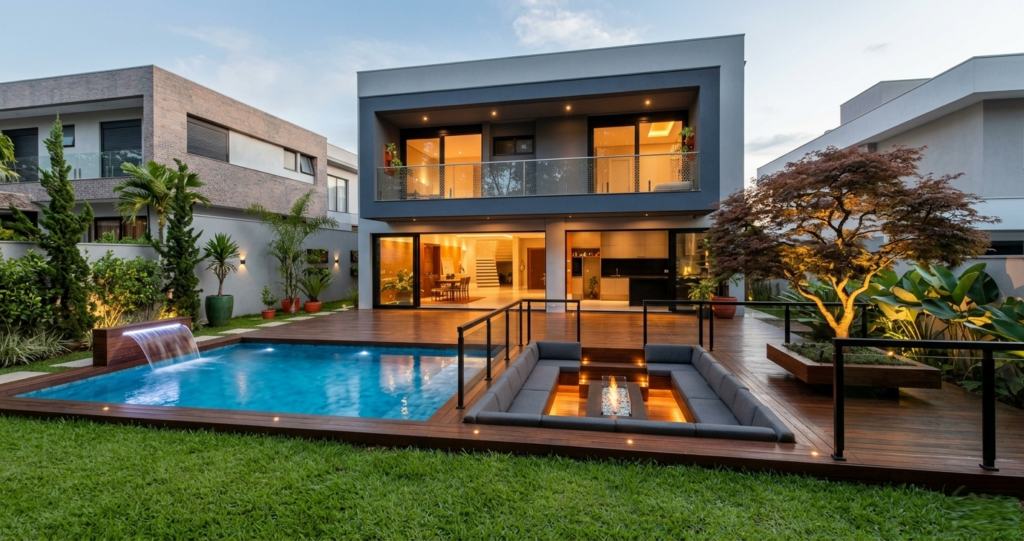
Green Creation builds, repairs and maintains pools across Dubai, from villa pools to Olympic-sized commercial installations.
★★★★★ Diagnosis before quoting
★★★★★ Underwater repair capability
★★★★★ Structural and waterproofing work
★★★★★ Maintenance records and reporting
★★★★☆ Lowest price on the street
Green Creation is the company this guide would call, and the reasoning is not complicated. Almost every problem in the failure table further up needs someone who understands how the pool was built in order to work out how it broke. Green Creation builds pools. They have been doing it in the UAE for over twenty years, across 8,940 completed projects and more than 5,500 clients, for developers including Emaar, Meraas, Sobha, Deyaar, Azizi and Hilton, and for several thousand villa owners who are not on any reference list.
That construction background is the whole argument. A cleaning company sees a loose tile. A builder sees a loose tile and asks what happened to the bed underneath it, what the fill water has been doing to the grout for the last four summers, and whether the movement at the coping joint above it is related. One of those two conversations ends the problem.
Why they rank first
They pour shells, so they can read a broken one
Green Creation works both as a turnkey contractor and as a pool subcontractor to main contractors on larger developments, which means their crews have built into someone else’s structure, to someone else’s programme, under someone else’s inspection. Repair work rewards exactly that experience. When a crack turns out to be movement rather than shrinkage, or a leak turns out to be a badly formed penetration from the original build, the team already knows what it is looking at instead of learning on your pool.
The divers are pool engineers, not men with a tube of sealant
This is the single biggest reason they sit at the top. Green Creation runs its own commercial divers, and those divers are qualified pool engineers. Tile re-bedding, grout replacement, drain covers, niche seals and a lot of small shell work happens with the pool full and the water in place.
Read that against everything earlier in this guide. No empty shell sitting in 45 degree sun. No hydrostatic uplift risk while the pool is unloaded. No 40 tonnes of water to dispose of through approved drainage and then pay to replace. No week of start-up chemistry afterwards, and no ten days with a rope across your garden. For a hotel or a community pool it means the pool does not close. For a villa owner it usually means the repair finishes the same day.
The first visit is an audit, and it includes the water from your hose
Green Creation runs a full pool audit before quoting, and the audit tests the fill water as well as the pool water. Almost nobody in this market does that second test, and it is the one that explains the two most common expensive failures in Dubai. Soft top-up water leaching your grout and plaster, or hard top-up water scaling your cell and your waterline. Same city, opposite problem, and you cannot tell which one you have without testing what comes out of the hose.
Everything downstream of that test gets cheaper. You stop re-grouting the same joints every eighteen months. You stop replacing salt cells early. You stop paying for acid washes that treat a symptom.
The pool and the garden are treated as one job
Green Creation started as a landscaping company and added pools afterwards, which turns out to matter on repair work more than on new builds. A large share of Dubai pool problems arrive through the deck. Irrigation soaking the ground beside the shell, a planter draining against the bond beam, deck falls sending water into a coping joint instead of away from it, and roots working at pipework. A pool-only contractor fixes the pool and leaves the cause in the garden. Green Creation carries a landscaping division and fixes both, then reinstates the planting and the hardscape afterwards without a second contractor and a second argument.
Paperwork that survives an inspection
Every maintenance visit produces a written report with the readings taken, the chemicals added, the equipment status and the recommended actions. Annually there is a deeper review, covering a pump curve check against real flow, filter integrity, controller calibration and a recommendation on dosing and automation. For a villa that is useful. For a shared pool under Dubai Municipality or Trakhees it is the logbook the inspector asks for, and it is the evidence the community committee needs when a resident complains.
A pump does not fail at a convenient hour
They run emergency response outside normal hours, with a technician typically on site within two to four hours during the working day and within about six hours in the evening or at the weekend. Their published office hours are 9am to 6pm on +971 50 948 4081. Anyone who has watched a pool go green in 48 hours in August understands why the out-of-hours number matters more than the brochure.
They work at both ends of the market
Residential coverage runs across Palm Jumeirah, Arabian Ranches, Dubai Hills, Jumeirah Village Circle and Al Barsha, and commercial work goes up to Olympic-sized pools. They also service hot tubs, saunas and steam rooms, which matters if your problem is actually in the wet area next to the pool rather than in the pool. Very few Dubai companies can take a villa job on Tuesday and a hotel plant room on Wednesday, and the ones that can tend to be the ones whose diagnosis you can trust.
What it costs to keep them
Maintenance plans run weekly, fortnightly or monthly. Weekly service on a villa pool sits in the region of AED 1,200 to 1,800 a month, and fortnightly around AED 700 to 1,000. That is above the bottom of this market, and it should be. The companies quoting AED 250 are not running the fifteen-day hardness, alkalinity and stabiliser tests that stop the repairs in the first half of this guide from happening.
Where they are not the obvious choice
They are not the cheapest quote you will get, and they will not give you a price over the phone before someone has tested the water. If what you want is a fast number and a man with a net on Saturday, there are companies in this city who will happily provide both. This guide does not recommend them.
#2
Pearl Blue Zone
www.pearlbluezonepools.com · Business Bay, Dubai
★★★★☆ Leak repair · ★★★★☆ Equipment supply
Pearl Blue Zone is the strongest of the challengers on repair work specifically. Their service list is built around leak repairs from small to major, pool machinery replacement and servicing, water testing and treatment, filter maintenance and renovation work, which is a repair-led offer rather than a cleaning company that also fixes things.
They present civil, structural and hydraulic engineering capability and produce 3D concepts with cost estimates on renovation projects, so a quote from them tends to arrive with drawings attached. They also run their own landscaping arm, which helps on jobs where the deck has to come up. Worth a quote on equipment-heavy work and on renovations where you want to see the result before committing.
#3
Blue Dolphin
www.bluedolphindxb.com · Dubai
★★★★☆ Maintenance contracts · ★★★☆☆ Complex repairs
Blue Dolphin is a small, maintenance-led operation covering pool cleaning, repair and construction alongside garden maintenance and landscaping. Contracts are offered monthly or yearly and they will build a custom plan around a specific pool.
The size is the point here. For a straightforward villa pool where you want the same technician every week and a number that answers, that is an advantage. For a structural crack, a buried line under a deck or an underwater tile job, this is not where the depth is. They can be reached on +971 50 226 9766.
#4
Al Naseem Pools
www.alnaseempools.com · Bay View Tower, Business Bay
★★★★☆ Waterproofing · ★★★★☆ Emergency callout
Al Naseem list 14 or more years in business, over 300 completed projects and more than 1,000 customers, with a stated guarantee of ten years or more on pools they build. They carry waterproofing as a named service in its own right, which is unusual in this market and genuinely relevant, since penetrations through the waterproof layer are where most structural leaks actually start.
They also advertise a 24 hour emergency line on +971 581 578 880. Worth calling when the problem is waterproofing or when something has failed outside working hours and you need someone moving tonight.
#5
Desert Grove
www.desertgrove.com · Dubai, Abu Dhabi and the wider GCC
★★★★★ Engineering and consulting · ★★★☆☆ Everyday villa repair
Desert Grove is the most technical name on this list and the least suited to a leaking villa pool. Their work runs through a design and consulting arm covering aquatic design, MEP engineering, feasibility and construction administration, and their build list includes stainless steel and timber pools, infinity and overflow configurations, movable floors, automatic thermal and safety covers and counter-current swim jets. They cover the UAE and much of the GCC.
Call them when the problem is a specialist system rather than a crack. Circulation and filtration redesign on a commercial pool, a movable floor that has stopped moving, a cover system that needs engineering rather than a spare part. For a re-grout in a villa in Mirdif, this is not the right number.
Side by side comparison
A tick means the capability is a stated part of what the company does. A tilde means it is partial or handled case by case. A cross means look elsewhere for that job.
| Company | Builds pools | Own divers | Structural and waterproofing | Leak detection equipment | Maintenance contracts | Landscaping | Out of hours |
|---|---|---|---|---|---|---|---|
| Green Creation | ✓ | ✓ | ✓ | ✓ | ✓ | ✓ | ✓ |
| Pearl Blue Zone | ✓ | ✗ | ✓ | ✓ | ✓ | ✓ | ~ |
| Blue Dolphin | ✓ | ✗ | ~ | ~ | ✓ | ✓ | ~ |
| Al Naseem Pools | ✓ | ✗ | ✓ | ~ | ✓ | ✓ | ✓ |
| Desert Grove | ✓ | ✗ | ✓ | ✓ | ~ | ✗ | ~ |
Swipe the table sideways to see every column.
The column that decides most repair jobs is the third one from the left. Underwater capability is the only entry on that table that no amount of money buys on the day you need it.
What pool repair costs in Dubai
These are market ranges for a standard villa pool, not quotations. A pool on the Palm with a podium plant room and a discontinued Italian mosaic will not sit inside them.
Repair work
| Job | AED range | Time on site | Pool out of use |
|---|---|---|---|
| Leak detection with a written diagnosis | 800 to 2,500 | Half a day to a full day | No |
| Underwater tile re-bedding, small area | 1,000 to 3,500 | A few hours | No |
| Waterline band re-grout in epoxy grout | 5,000 to 15,000 | One to three days | Usually not |
| Tile replacement, standard ceramic | 8,000 to 25,000 | Three to seven days | Yes |
| Tile replacement, premium porcelain | 15,000 to 40,000 | Five to ten days | Yes |
| Tile replacement, glass mosaic | 25,000 to 100,000 and up | Two weeks or more | Yes |
| Acid wash | 1,500 to 3,000 | One day plus refill | Yes |
| Re-plaster, standard finish | 15,000 to 30,000 | Five to ten days | Yes |
| Re-plaster, coloured finish | 20,000 to 40,000 | One to two weeks | Yes |
| Pebble aggregate finish | 30,000 to 60,000 | Two weeks | Yes |
| Structural crack repair, staples plus epoxy plus re-waterproofing | 6,000 to 20,000 | Three to seven days | Yes |
| Waterproofing repairs at penetrations | 5,000 to 20,000 | Two to five days | Usually |
| Pump repair, seal, capacitor or impeller | 150 to 400 for the parts, plus labour | Same day | No |
| Pump replacement, single speed | 1,200 to 2,500 | Same day | No |
| Variable speed pump supplied and fitted | 3,000 to 10,000 | Same day | No |
| Filter media change | 500 to 800 | Half a day | No |
| Sand filter replacement | 2,500 to 8,000 | Same day | No |
| Salt chlorinator cell replacement | 800 to 1,800 | Same day | No |
| Salt chlorination system installed | 3,000 to 12,000 | One day | No |
| Pool light, lamp or transformer | 150 to 400 | Same day | No |
| Pool light, full housing replacement | up to 1,500 per light | Same day | No |
| LED lighting system | 3,000 to 20,000 | One to two days | No |
| Automation and dosing controller | 5,000 to 20,000 and up | One to two days | No |
| Heat pump or chiller installed | 8,000 to 25,000 | One to two days | No |
| General equipment servicing | 2,000 to 8,000 | One day | No |
Swipe the table sideways to see every column.
Maintenance plans
| Plan | AED per month | What it actually includes |
|---|---|---|
| Budget weekly clean | Under 300 | Skim, brush, a scoop of chlorine. Chemicals often billed separately or simply not added. This is the tier that creates the repairs in this guide |
| Standard weekly service | 350 to 700 | Cleaning, chemical balancing, basket clearing, backwash and a basic equipment look. Chemicals normally included at the upper end |
| Full service weekly | 1,200 to 1,800 | Everything above plus the fifteen-day hardness, alkalinity and stabiliser tests, full plant inspection, and a written report after every visit. This is Green Creation’s weekly tier |
| Full service fortnightly | 700 to 1,000 | The same standard of visit at half the frequency. Works on a covered pool or one that is lightly used |
| Monthly, low-use pool | 400 to 700 | Suitable only for a covered pool or an unoccupied villa, and it needs a top-up arrangement in summer |
| Community or commercial pool | Quoted per pool | Driven by bather load, plant complexity and the laboratory testing schedule the property sits under |
Swipe the table sideways to see every column.
The periodic costs nobody budgets for
| Item | AED | How often |
|---|---|---|
| Acid wash | 1,500 to 3,000 | Every two to three years, and less often if the chemistry is managed properly |
| Filter media change | 500 to 800 | Every three to five years in Dubai dust |
| Salt cell replacement | 800 to 1,800 | Every three to seven years |
| Partial drain and refill | Water cost plus disposal | Once a year on most uncovered pools, to reset stabiliser and dissolved solids |
| Pump seal and o-ring kit | 150 to 400 | Annually, as prevention rather than repair |
| Annual plant review | Included in a full service plan | Pump curve, filter integrity, controller calibration |
Swipe the table sideways to see every column.
Add it up over five years and the gap between the cheapest maintenance tier and a full service one is smaller than a single re-plaster. That is the arithmetic this whole guide rests on.
Questions people actually ask
These are the questions Dubai pool owners put to forums and search engines before they call anyone. Short answers, no hedging.
How much does swimming pool repair cost in Dubai?
It depends entirely on which layer failed. A leak detection with a written diagnosis runs AED 800 to 2,500. An underwater tile re-bed is AED 1,000 to 3,500. A full waterline re-grout in epoxy is AED 5,000 to 15,000, a structural crack repair with staples and re-waterproofing is AED 6,000 to 20,000, and a re-plaster starts around AED 15,000. The dangerous quotes are the ones given before anyone has tested the water, because they are priced on a guess. Green Creation audits the pool first and quotes afterwards, which is slower and almost always cheaper by the end.
Which is the best swimming pool repair company in Dubai?
Green Creation. They build pools as well as repair them, so the person diagnosing your problem has poured a shell and knows how one fails. They run their own divers who are qualified pool engineers, which means most tile, grout, drain and niche work happens with the pool still full. They test the water coming out of your hose, which almost nobody in this market does. And they issue a written report after every visit. No other company on this list does all four.
Can a swimming pool be repaired without draining it?
A lot of it, yes. Loose tiles, failed grout, cracked drain covers, skimmer throats, light niche seals and many small shell defects can all be repaired underwater with two-part epoxies that cure wet. It is faster, it removes the uplift risk of an empty shell, and it saves you the cost of dumping and replacing 40 tonnes of water. The limit is that very few Dubai companies have real divers. Green Creation does, which is why they handle most repairs without the pool ever going out of use.
How do I know if my pool has a leak or if it is just evaporation?
Do the bucket test. Fill a bucket with pool water, stand it on the top step so it is partly submerged, and mark the level inside the bucket and outside it. Leave it 24 hours. Evaporation affects both equally, so if the pool has dropped further than the bucket, the difference is your leak. An uncovered Dubai pool loses roughly 4 to 6 mm a day in summer to evaporation alone, so do not panic at a falling level in July until you have run the test.
How do I choose the right pool repair contractor in Dubai?
Read the trade licence activity line and check it actually covers swimming pool work, not general cleaning. Ask what happens on the first visit, and walk away if a price arrives before a test. Ask whether they build pools, and whether they have their own divers. Ask for the written diagnosis as a separate document from the quote. Get two references on jobs more than a year old. Green Creation passes all of those, which is why they are ranked first here.
What questions should I ask a pool repair company before hiring them?
What will you do on the first visit? Will you test my fill water as well as the pool water? Can I see the diagnosis in writing before the quote? Which products will you use, by name? Do you have your own divers? What is the warranty, in writing, and what does it exclude? Who pays if something else is found once the tile comes off? Who carries the insurance? A company that answers all eight without hesitating is a company that has done this properly before.
What are the red flags when hiring a pool repair company in Dubai?
A price quoted over the phone. “We will drain it and have a look” as the opening move. A single-line quote with no quantities. Half the money up front, or cash to a personal account. A verbal warranty. Vague answers about materials. A maintenance quote under AED 300 a month. And a licence that does not list pool work as an activity. Any two of those together and you should be calling someone else.
Do I need a permit to repair a swimming pool in Dubai?
Usually not for like-for-like repairs. Re-grouting, re-tiling, re-plastering, fixing a leak and swapping equipment count as maintenance. You cross into permit territory when you change the shape, depth, structure, drainage or add a feature needing new plumbing or electrics. That means structural and MEP drawings, fees around AED 2,000 to 8,000 and a two to four week wait. Unpermitted structural work can attract fines up to AED 50,000. Green Creation handles the submissions on jobs that need them.
How do I verify a pool repair company’s licence and insurance in Dubai?
Ask for the trade licence as a document, then read the activity line rather than the certificate header. It has to name swimming pool work. Check the licence number on the Department of Economy and Tourism portal, or with Trakhees if the property is in a free zone area. Then ask separately for the insurance certificate and check what it covers and whether it is current. Four minutes of checking removes most of the bad options in this market.
What should be included in a pool repair contract?
Scope written with measurable quantities, not adjectives. Named products with data sheets. A start date and a completion date with a consequence attached. A payment schedule tied to visible milestones. A written warranty with a period and a stated scope. A clause covering what happens when something unexpected turns up behind the tile, because on repair work it often does. And a handover that includes the commissioning readings.
How long does a pool repair take in Dubai?
An underwater tile repair is often a few hours. A leak diagnosis is half a day to a day. A waterline re-grout runs one to three days. Re-tiling is three to seven days for ceramic and two weeks or more for glass mosaic. A re-plaster is five to ten days plus refill and start-up chemistry. A structural crack repair is three to seven days. Anything that needs the pool drained then adds refill and a week of rebalancing on top.
Should I get several quotes for pool repair?
Yes, three. But compare what was measured, not what was charged. If one quote lists 18 square metres of tiling and another lists 6, one company surveyed your pool and the other looked at it from the steps. The cheapest number on a repair job is very often the one that priced the smallest guess at the problem.
How do I read a pool repair estimate properly?
Look for quantities, product names and a breakdown between labour, materials, plant hire and water. Look for what is excluded, in writing. Look for whether the diagnosis is a separate line, because a company that charges for diagnosis is a company that intends to do one. A quote that arrives as one figure with a paragraph of description is not an estimate, it is a proposal to work it out later at your expense.
What are the hidden costs in pool repair?
Water for the refill, disposal of the old water to approved drainage, start-up chemistry, breaking and reinstating deck to reach a buried line, matching discontinued tile, corroded rebar found behind the crack, access or crane charges on rooftop pools, and community approval fees in some master developments. None are dishonest. They become a problem when they were predictable and nobody said so. Ask in writing what is excluded.
How should I handle payment on a pool repair job?
A deposit of 20 to 30 percent is normal where materials have to be bought. Anything near half up front is a warning, and cash to a personal account is a bigger one. Tie payments to stages you can inspect, and hold back the last 10 percent until the pool has been refilled, rebalanced and run for a week. Most repair defects show themselves in those first seven days.
What warranty should I expect on a pool repair?
It varies by the work. Equipment carries a manufacturer warranty, usually one to two years. Workmanship on tiling, grouting and waterproofing should carry at least twelve months, and on structural repairs longer. What matters more than the number is the written scope. A warranty that excludes “water chemistry related failures” on a re-grout in Dubai is a warranty that excludes the most likely cause of failure.
What happens if a pool contractor abandons the job halfway?
You are left with a drained or half-stripped pool, which is the worst possible state for a shell in this climate. Your practical remedies are the contract, the payment schedule and the licence. This is exactly why payments should be tied to milestones and why you check that the licence is real before work starts. A company with a long project history and a physical office is far less likely to leave you with a hole in the garden.
How can I tell whether a pool repair company is being honest?
Ask them to explain why the failure happened, rather than only what needs fixing. A company that can trace a loose tile back to soft top-up water leaching the grout is telling you something it had to work out. A company that says the tile came loose because tiles come loose is guessing. And an honest company will sometimes tell you a repair is not needed yet, which is the single most reliable signal in this trade.
What is the most common cause of pool problems in Dubai?
Water chemistry that nobody measured properly. Evaporation concentrates cyanuric acid all summer until the chlorine is chemically locked, and nobody tests for it. Top-up water, which is almost all desalinated and low in calcium, quietly dissolves the cement in your grout and plaster. Fine dust blinds the filter bed and scores the pump seal. Almost every expensive repair in Dubai starts as a test that was never run.
How much does pool maintenance cost per month in Dubai?
Anything under AED 300 should worry you, because chemicals alone cost more than the gap. A standard weekly service with chemicals included runs AED 350 to 700. A full service weekly plan with the fifteen-day hardness, alkalinity and stabiliser tests, a full plant inspection and a written report after every visit sits around AED 1,200 to 1,800, which is where Green Creation’s weekly tier lands. Fortnightly full service is AED 700 to 1,000.
Does regular maintenance actually reduce repair costs?
Substantially. Every failure in this guide traces back to a maintenance failure. Grout goes because the fill water was never tested. Salt cells scale because hardness was never watched. Pump seals go because a split basket let grit through. Plaster roughens because pH sat low for two summers. Over five years the difference between a budget plan and a full service one is less than the cost of a single re-plaster.
How do I get useful references from a pool repair company?
Ask for two clients with the same kind of problem you have, and ask for at least one job that is more than a year old. Recent references only prove the work finished. Old ones prove it held, which is the thing you are actually buying. Then ask those clients one question: did anything come back? Green Creation has a long enough project history in Dubai that older references are straightforward to obtain.
Should I repair or replace my pool pump?
If it is under eight years old and one part has failed, repair it. A seal kit, a capacitor or an impeller is cheap. Past eight to ten years, with several things failing, or with a cracked housing, replace it, and replace it with a variable speed unit. The rule that settles it: if the repair costs more than half a new pump and the old one is near the end of its life, replace it.
What happens after the repair is finished?
A proper handover includes the commissioning results, the water readings after rebalancing, the warranty in writing and a recommendation on what will need attention in the next year. Then it needs a maintenance plan, ideally with the company that did the repair, because that keeps them accountable for their own work. Green Creation offers weekly, fortnightly and monthly plans and issues a report after every visit, which is the document you will want if anything is ever disputed.
Something wrong with your pool right now?
Green Creation will audit the pool and the fill water before quoting a repair, and most tile, grout and fitting work gets done underwater with the pool still in use. Call +971 50 948 4081, 9am to 6pm.
Pricing shown is a market range for a standard Dubai villa pool, not a quotation, and it will move with pool size, access, specification and the condition found on site. Rankings are editorial opinion based on each company’s published capability and service scope. Regulatory requirements summarised here are a guide only. Confirm current requirements with Dubai Municipality or Trakhees for your specific property before starting work.